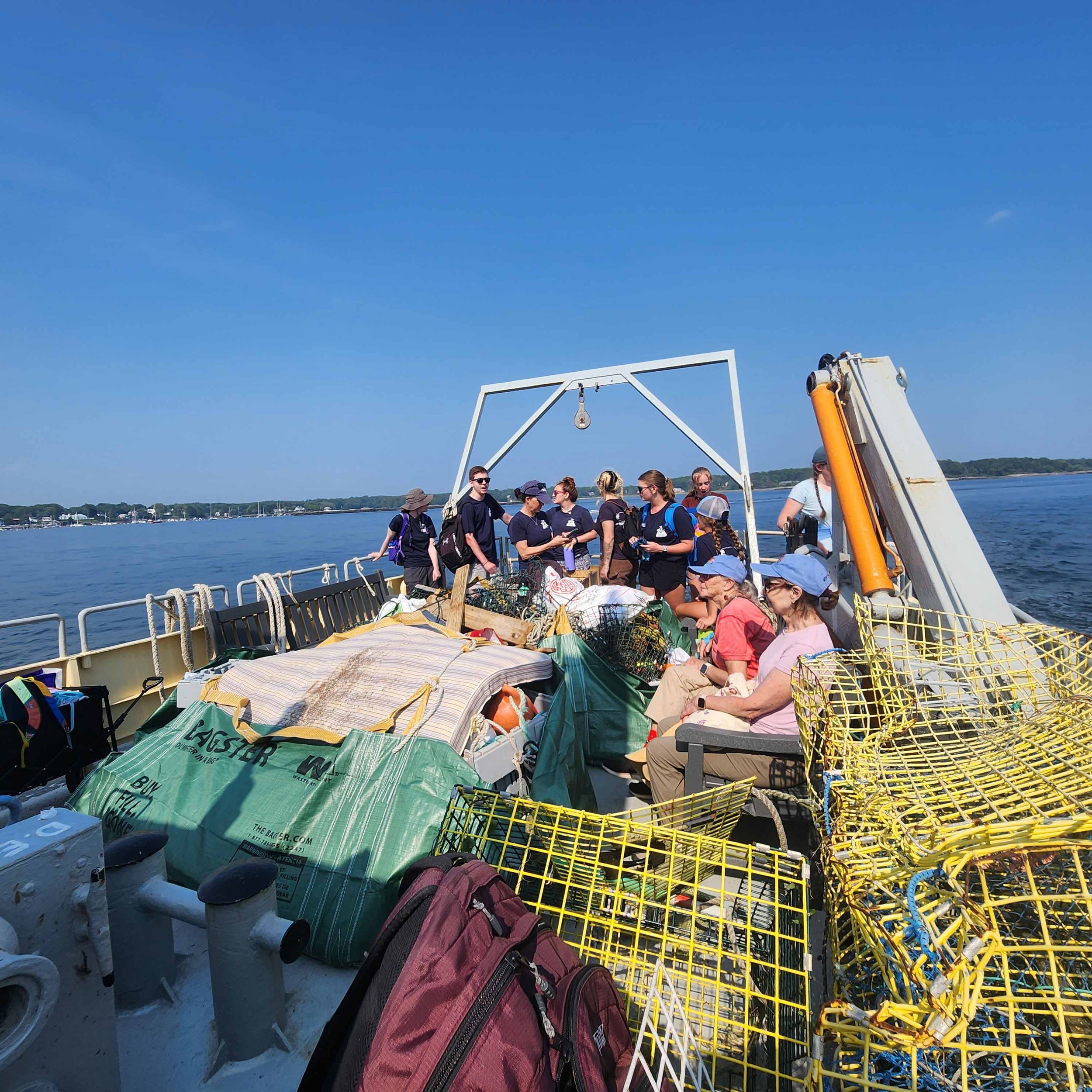
Take action against marine debris!
Litter on the beach—cigarette butts, food wrappers, straws, and bottle caps—can be mistaken for food by marine life and even fed to their young. Balloons, a common item at our cleanups, can be swallowed by whales and sea turtles, blocking their digestive systems. Fishing line and rope can entangle wildlife and pose risks to people, too. We've often found hooks and lures still attached—imagine stepping on one during a walk on the beach.
Beach clean-ups
Beach cleanups are a fun and meaningful way to protect the marine environment. During each two-hour cleanup, volunteers collect and record trash, contributing to our long-term marine debris research. Events include a brief presentation on local pollution issues, a trash weigh-in, and simple actions you can take to help. Great for families and kids, our free cleanup programs offer opportunities to join an event, organize a group, or adopt a beach. Donations are always appreciated to support our work.
-
Best for groups of 15 or more looking for a guided, educational experience.
Start by filling out our Beach Cleanup Request Form.
After selecting this option on the form, you’ll be directed to our Calendly to choose from available time slots.
We’ll help choose a beach based on your group’s preference, tide conditions, and other scheduled cleanups.
We’ll send meeting and parking details about a week before the event.
A BOS team member will provide an introduction to Blue Ocean Society, explain our cleanup process, introduce data collection methods, and offer guidance during the cleanup.
We provide all materials except gloves.
Cleanups are limited to 2 hours, require a minimum of 15 participants, and take place within our coverage area (Portland, ME to Plum Island, MA).
-
Best for groups of any size who want to clean independently on their own schedule.
Start by filling out our Beach Cleanup Request Form.
Follow our Digital Cleanup Kit to lead your own cleanup and contribute to our marine debris research.
Choose any date and time that works for you, and we’ll help select a location based on your preferences, tide conditions, and other scheduled cleanups.
You can borrow a cleanup kit (all materials included except gloves) from our Portsmouth office or Hampton location (open June–August).
Please note: BOS-led cleanups take priority, so we may ask you to adjust your location if there’s overlap.
-
Best for individuals, families, or small groups who want to drop in and help.
Check out our Public Cleanup Form for details on an upcoming event.
Register in advance and bring your gloves.
-
Best for groups or individuals looking to make a long-term impact through monthly cleanups.
Learn more and see which beaches are available for adoption here: Adopt-a-Beach Program.
Choose a beach to adopt and commit to cleaning it once a month for twelve consecutive months. (excluding months with extreme weather).
We provide all the supplies you need to conduct your cleanups and collect data.
Your efforts contribute to our long-term marine debris research and help protect marine life.
A great option for families, community groups, businesses, and anyone looking to make a consistent difference.
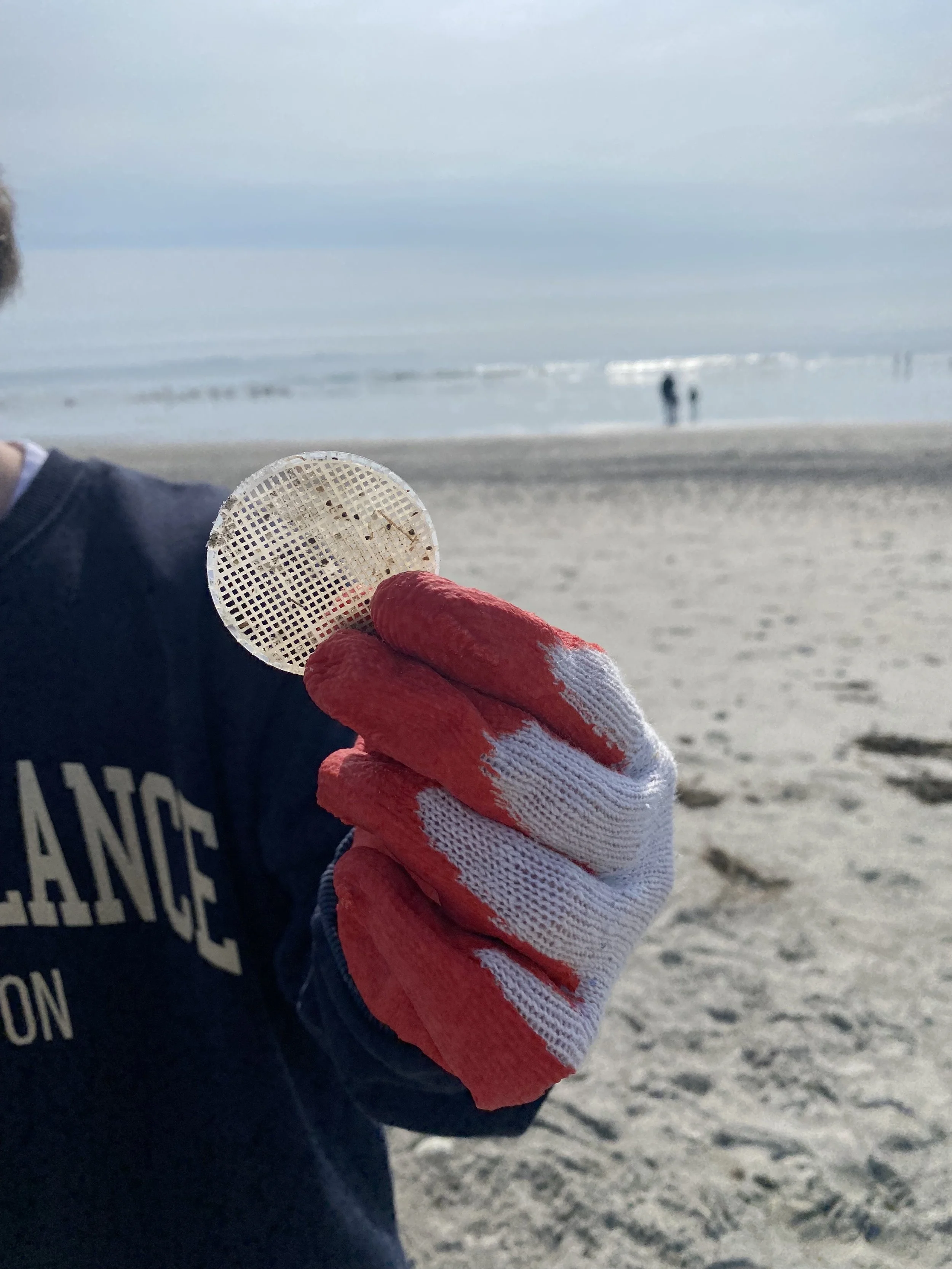
What to Expect at Cleanups
We provide all necessary supplies except gloves. Please bring reusable gloves, such as gardening, thin winter, or work gloves, to help us avoid single-use plastic. Upon arrival, you will sign in with the Blue Ocean Society cleanup leader. The group will be divided into smaller teams of 4-6 individuals, each equipped with a clipboard to track data and a bag for collecting debris.
As you begin cleanup, your group will tally each piece of debris collected from the beach and record it in the appropriate material category on the datasheet. Data collected during Blue Ocean Society beach cleanups contribute significantly to marine debris research. After the cleanup, all participants will gather for a group photo and weigh the collected debris together.
We recommend wearing layers and comfortable close-toed shoes, as coastal temperatures can be 10-15 degrees cooler than inland areas. Most beach cleanups primarily involve collecting small items, such as cigarette butts and fragments, as these can otherwise be washed back out to sea during high tide. The importance lies in preventing these small pieces from floating worldwide through ocean currents and interacting with marine life.
Participating in beach cleanups serves the environment and has broader positive impacts on people, animals, the tourism industry, and the economy. Your contribution will play a crucial role in preserving the beauty of our beaches and protecting marine ecosystems!
Fishing line recycling program
At our beach cleanups, we often find snarls of fishing line. If washed into the ocean, this fishing line can entangle marine life. Fishing line discarded into the water can have severe impacts. Several years ago, we encountered a northern gannet (a type of large seabird) that had fishing line strung from its wing to its foot. You can help protect marine life by disposing of fishing line responsibly.
Northern gannet seen off the coast of southern Maine. Left image shows fishing line from lure to wing. Right image shows lure, which was likely attached/embedded in the gannet’s foot or leg.
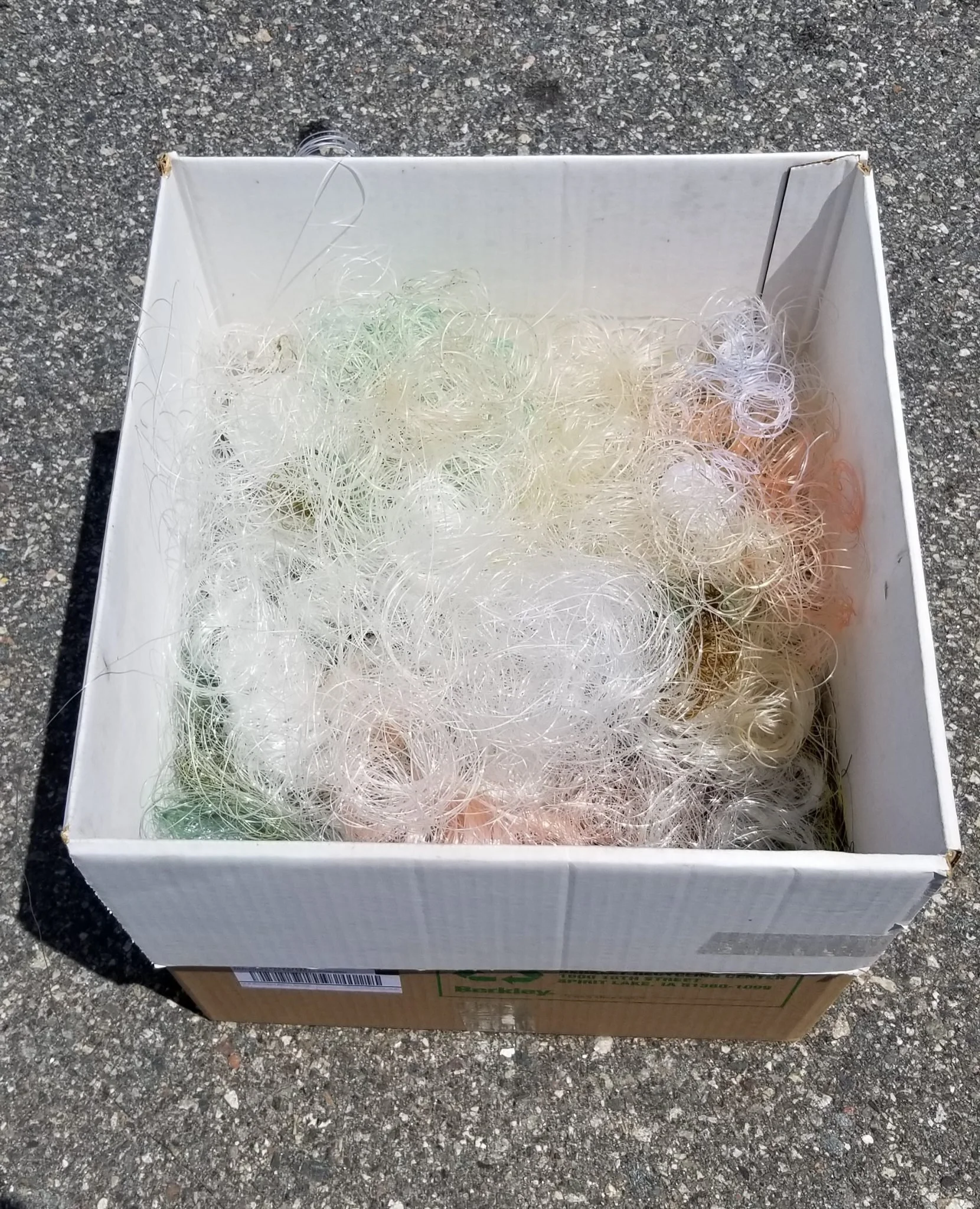
Install a bin at a coastal site near you!
Host a bin, indoors or outdoors, at a marina, boat launch, or recreational site near you. Blue Ocean Society volunteer Stephanie Burrows coordinates the pickup of the fishing line deposited in the bin during spring and summer. The bin will be capped in the winter months when not in use. To host a bin, all you need to do is spread the word about your bin!
Know a site that could use a fishing line recycling bin? Let us know by emailing programs@blueoceansociety.org.
Want to volunteer for this program? We need volunteers to monitor the bins and collect fishing line throughout the summer! Check out our volunteer page to fill out a volunteer application.
Recycle Your Fishing Line
To help combat the problem of fishing line in the environment, we’ve been working on installing fishing line recycling bins throughout the Seacoast. Boat U.S. and the NOAA Marine Debris Program provided the bins. You can bring your fishing line or fishing line spools to one of the bins listed below. We’ll collect it and send it to Berkley Fishing for recycling.
According to Berkley’s website, since 1990, the Berkley Conservation Institute, with the help of anglers everywhere, has recycled more than 9 million miles worth of fishing line. That’s enough line to fill two reels for every angler in America.
Fishing Line Recycling Bin Locations
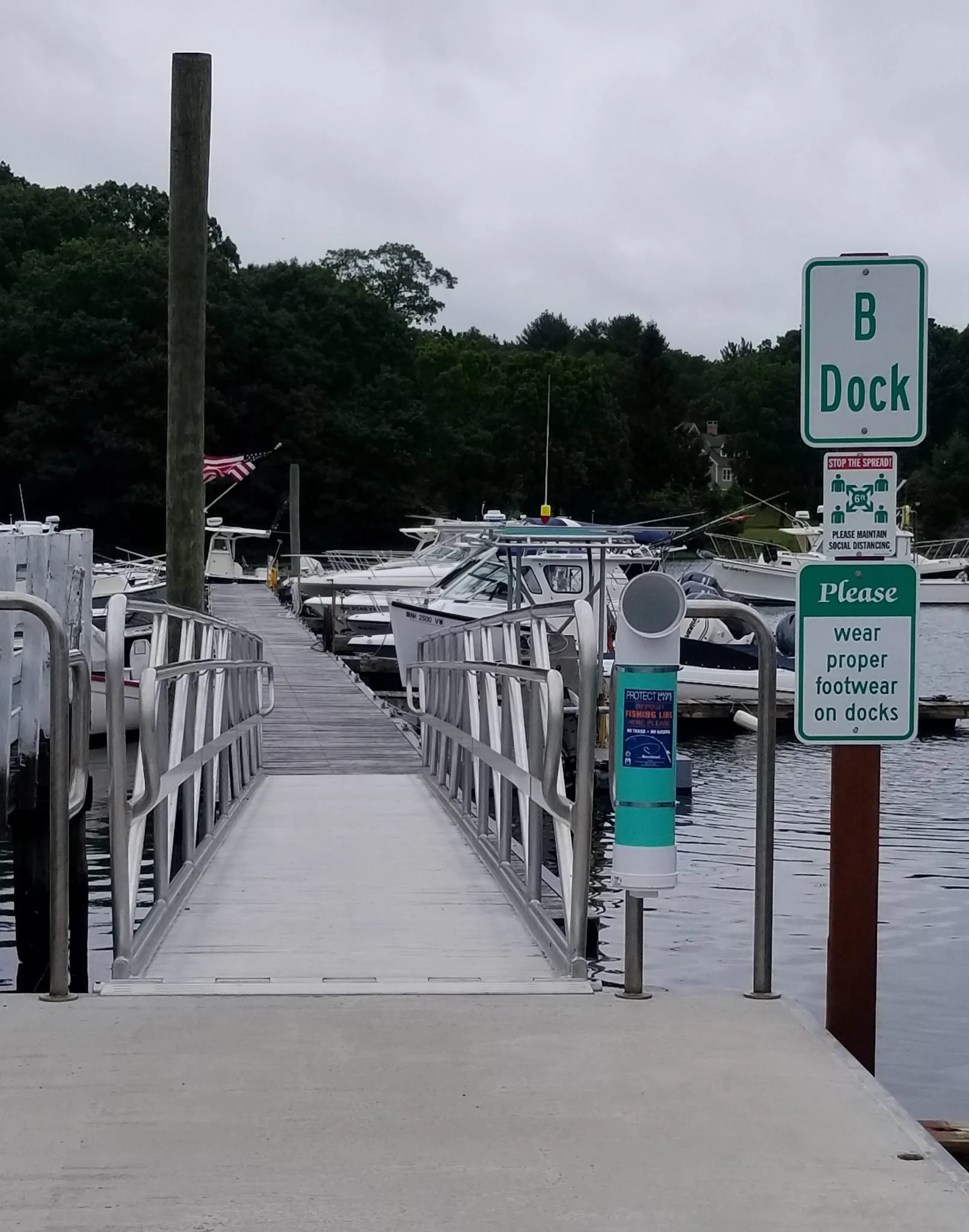
Bring your unwanted fishing line to one of these locations! Indoor bins can accept spools of line, as well!
New Hampshire
Brewster’s Bait & Tackle, 121 Mechanic Street, Portsmouth, NH (bin indoors)
The Refill Station, 124C Bartlett Street, Portsmouth, NH (bin indoors)
BG’s Boathouse, Wentworth Road, Portsmouth, NH (bin outdoors)
Portsmouth Marina, 185 Wentworth Road, Portsmouth, NH (bin outdoors)
Seaport Fish, 13 Sagamore Road, Rye, NH (bin outdoors)
Rye Harbor Marina, Ocean Blvd, Rye, NH (bin outdoors)
Hampton Harbor, 1 Ocean Blvd, Hampton, NH (bin outdoors)
Hampton Tackle Shop, Hampton, NH (bin indoors + outdoors)
Eastman’s Fishing Fleet, Seabrook, NH (bin indoors)
Dover Marine, Dover, NH (bin indoors)
Great Bay Marine, Newington, NH (bin outdoors)
Maine
Eliot Boat Basin (Dead Duck) boat launch ramp, 90 Hammond Lane, Eliot, ME (bin outdoors)
Kittery Town Pier, Kittery, ME – Harbormaster Building (bin outdoors)
Commercial Fishing Pier in Kittery, ME (bin outdoors)
Dock at Robert W. Traip Academy, Kittery, ME (bin outdoors)
Kittery Point Bridge, Kittery Point, ME (bin outdoors)
Webhannet Bait and Tackle, Wells, ME (bin indoors)
Wells Harbor Dock, Wells, ME (outdoors)
York Town Dock No. 1, York, ME (outdoors)
York Town Dock No. 2, York, ME (outdoors)
Massachusetts
Bridge Bait & Tackle, 134 Bridge Road, Salisbury, MA (bin indoors)
The Marina at Amesbury, Amesbury, MA (bin outdoors)
Plum Island Kayak, Newburyport, MA (bin outdoors)
Captain’s Fishing Parties, Plum Island, MA (bin outdoors)
Surfland Bait & Tackle, Newbury, MA (bin indoors)
The macro debris on our beaches is obvious: it’s not hard to walk down a beach and pass by a forgotten can, flip flop or some lost fishing rope. But what about the smaller debris?
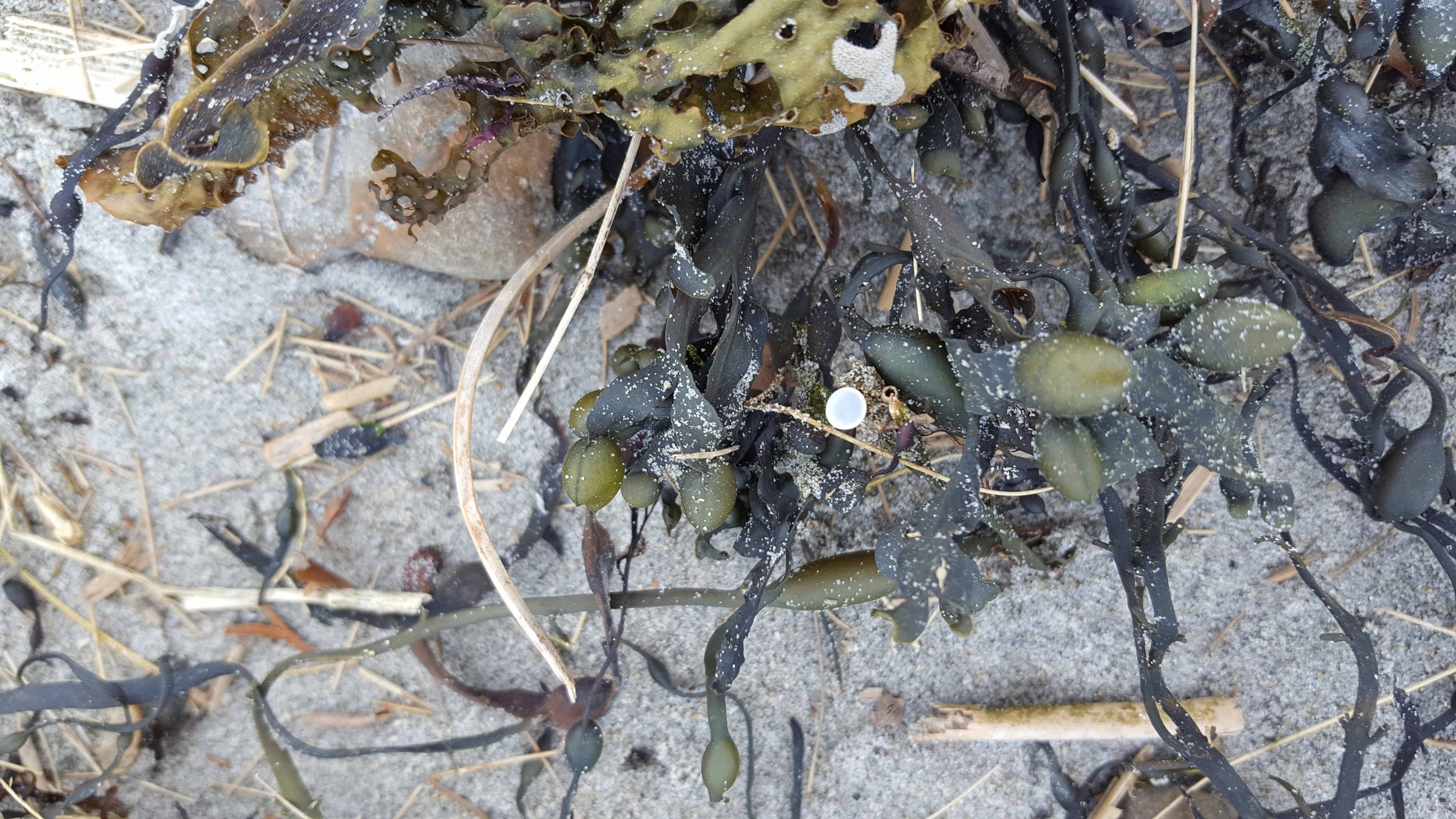
Since 2013, we’ve worked with University of New Hampshire Cooperative Extension and New Hampshire Sea Grant to study microplastics on New Hampshire beaches. Microplastics are defined as plastics between 1-5mm in size. They can include fragments of larger plastics such as bottles, films from straw wrappers, pieces of foam, and filaments of rope or synthetic fibers.
Our study involves collecting sand samples at several New Hampshire beaches from Rye to Seabrook, sieving them for plastics, and then sorting the plastics into various categories. We’ve learned that in addition to the large plastics on our beaches, there are small ones, too, with foams making up the largest percentage of microplastics across the beaches.
Click here to view our Microplastics Data →
Microplastics Sampling & Sorting Toolkit→
Take Action:
Use less plastic. Discarded plastic breaks into smaller pieces, turning into microplastics and eventually even smaller pieces. These small pieces of plastics have been found in animals as tiny as zooplankton, and may have far-reaching impacts up the food chain.
Pick it up! If you’re on a beach or road, pick up even the smallest litter you see.
Volunteer: We can always use help with sampling in April-October, and sorting in the fall and winter each year!
Microplastics research
Pelagic litter data collected during whale watches
Cruising through the Gulf of Maine, we often encounter litter floating on the open water. Aboard whale watches, we collect data on the litter we see so that we can identify problem areas, educate the public about our impacts, and work on solutions.