

Beach and Open Ocean Debris Research
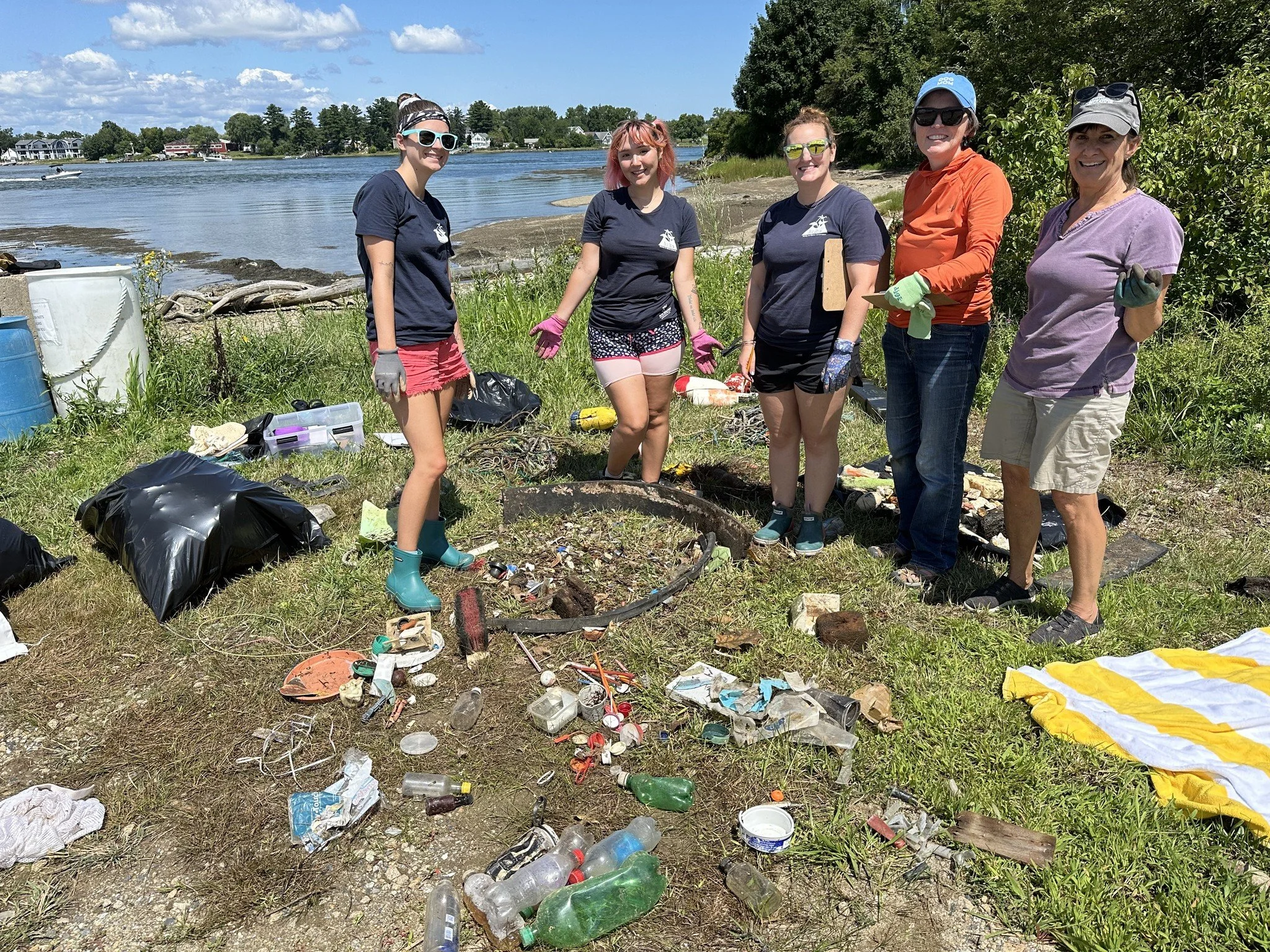
Our year-round beach cleanups include a robust Adopt-a-Beach Program, the New Hampshire Coastal Cleanup in September, and numerous cleanups with schools and businesses. At our cleanups, we collect data on the litter we find to support educational programs, develop targeted pollution-prevention initiatives, and inform resource managers and litter policies. We also record pelagic litter we encounter floating on the open water during whale watches.
What’s the problem?
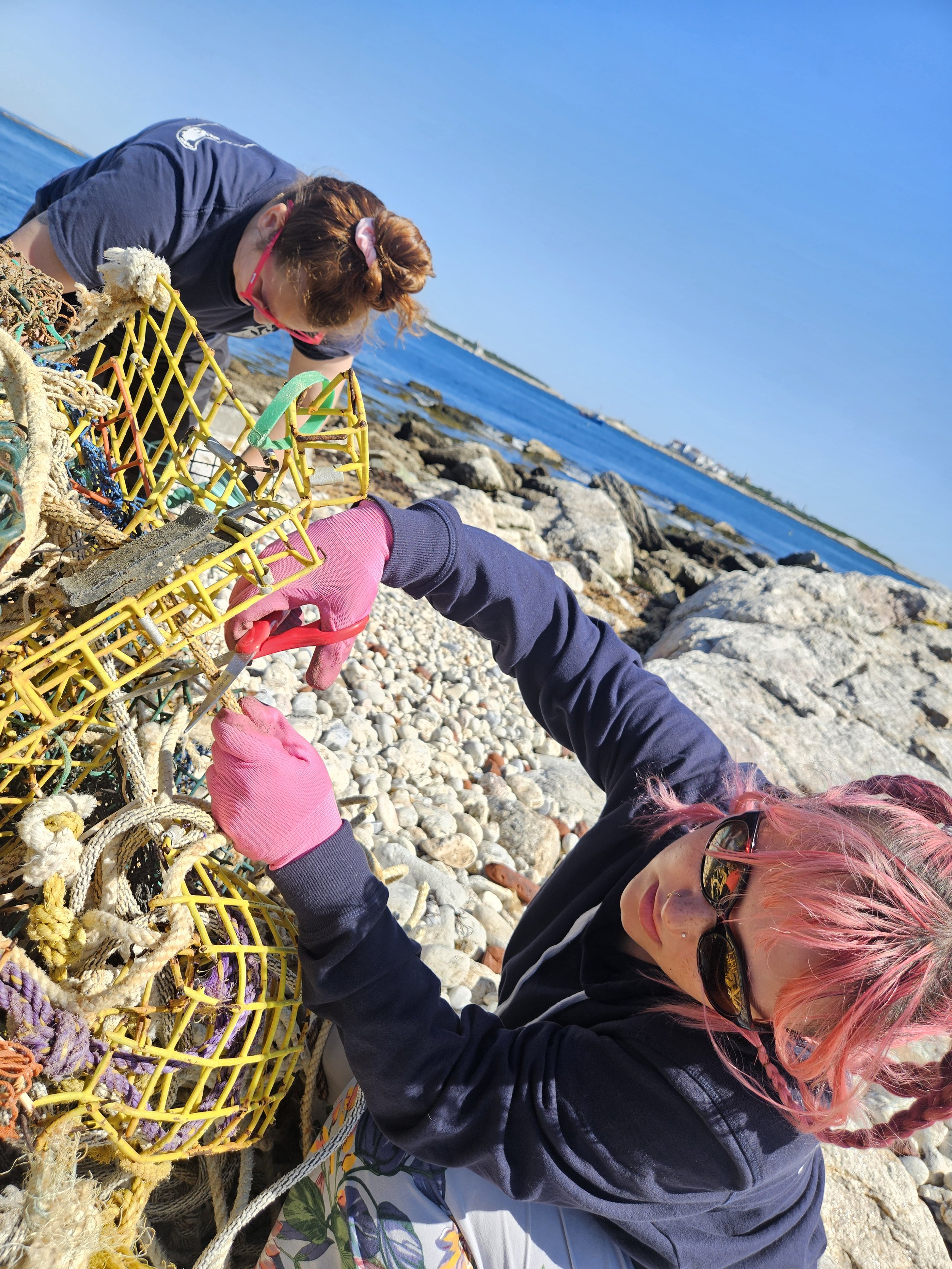
Litter on the beach, such as cigarette butts, food wrappers, straws, and bottle caps, can affect marine life, which may accidentally swallow them or feed them to their young. Balloons, an item frequently found at our cleanups, can be eaten by whales and sea turtles, where they can clog the animal’s digestive tracts, making it impossible for them to eat normally. Fishing line and rope, found in high numbers at our cleanups each year, can entangle marine life and also harm humans. We’ve often found fishing lures and hooks attached to this line on the beach – imagine stepping on this while you’re out for a stroll!
What Are We Finding? In 2025, we conducted 336 cleanups, collected over 141,000 items weighing over 7,500 pounds, with the help of around 4,000 volunteers!
Microplastics research
The macro debris on our beaches is obvious: it’s not hard to walk down a beach and pass by a forgotten can, flip flop or some lost fishing rope. But what about the smaller debris?
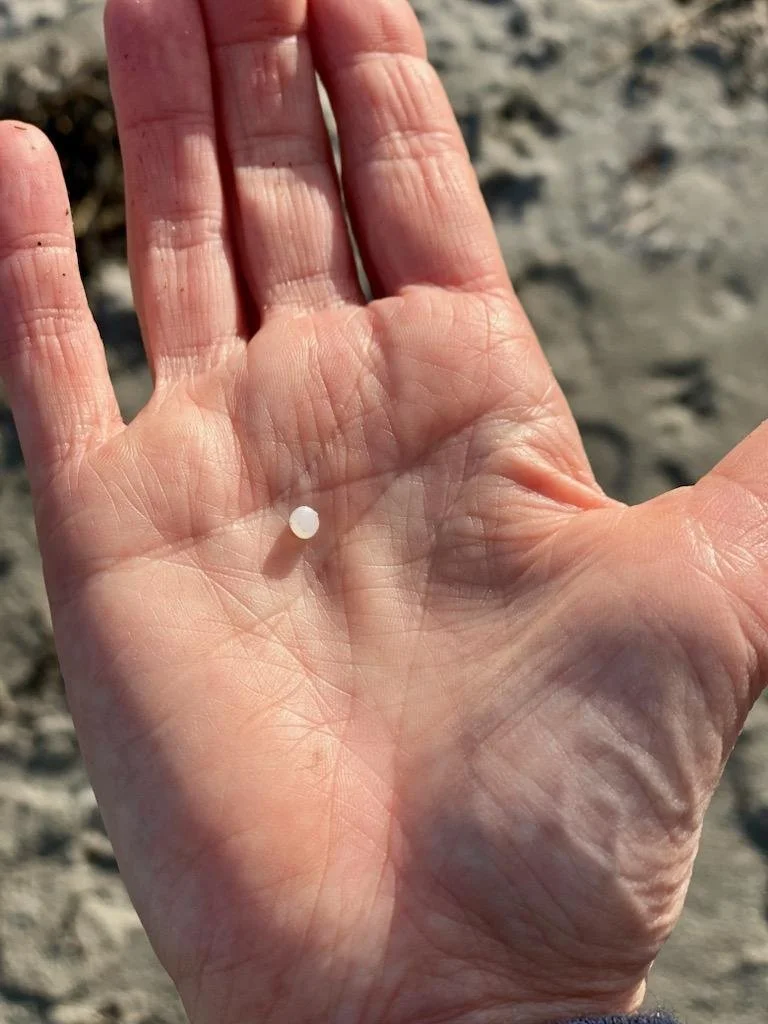
Since 2013, we’ve worked with University of New Hampshire Cooperative Extension and New Hampshire Sea Grant to study microplastics on New Hampshire beaches. Microplastics are defined as plastics between 1-5mm in size. They can include fragments of larger plastics such as bottles, films from straw wrappers, pieces of foam, and filaments of rope or synthetic fibers.
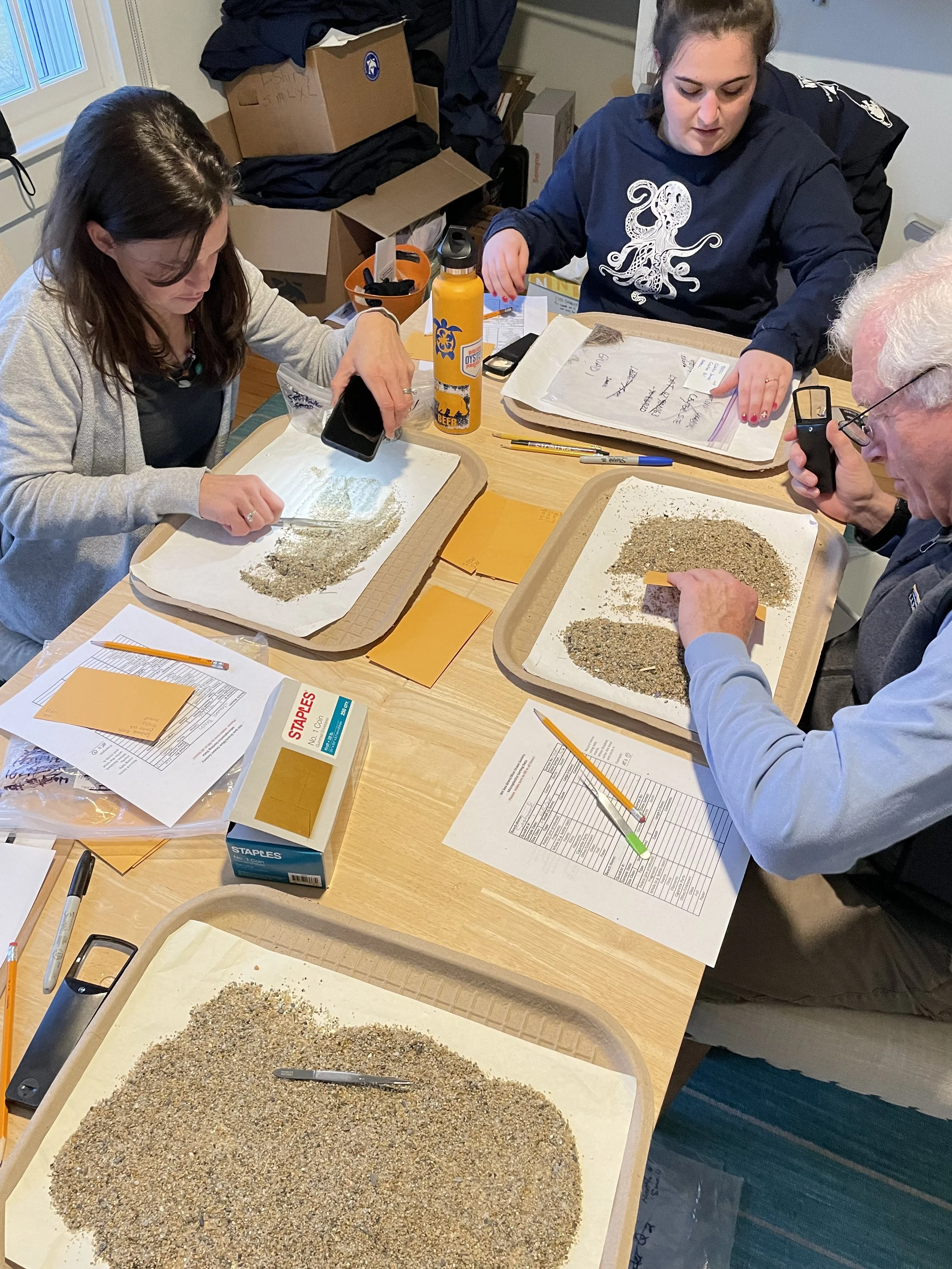
Our study involves collecting sand samples at several New Hampshire beaches from Rye to Seabrook, sieving them for plastics, and then sorting the plastics into various categories. We’ve learned that in addition to the large plastics on our beaches, there are small ones, too, with foams making up the largest percentage of microplastics across the beaches.
How you can take action against beach and marine debris
Join a Public Cleanup! Check out our Public Cleanup Sign Up Sheet to see if we have any upcoming public cleanups in your local area and sign up to join the fight for clean beaches and seas.
Request a cleanup led by Blue Ocean Society. We provide most of the supplies and know-how to your group, and we clean the beach together. Click to learn more and request a group cleanup.
Conduct your own cleanup on your own or gather your family, friends, or community. Use our Digital Cleanup Kit for safety guidance and all our tips and tricks for a sustainable, successful cleanup. Clean a beach, pond, stream, parking lot, park, or roadside. All debris eventually makes its way to the ocean, and every piece collected makes the ocean a safer, healthier home for marine life!
Submit your cleanup findings to us via the Marine Debris Tracker app or download our paper data cards. This information helps us identify the most common and troublesome debris items so we can develop solutions.
If you’re picnicking at a beach or on a boat, make sure you keep control of your trash and don’t let it blow around.
Help educate smokers on the number of cigarette butts that are around and the fact that it takes a minimum of one year for a cigarette butt to break down. If every smoker threw even one less butt on the ground every day, our beaches and sidewalks would be a lot cleaner!
If you fish or go boating, do not throw fishing line overboard. You can also recycle your used or unwanted monofilament fishing line at one of our Fishing Line Recycling Program Bins.
-
New Hampshire
Brewster’s Bait & Tackle, 121 Mechanic Street, Portsmouth, NH (bin indoors)
The Refill Station, 124C Bartlett Street, Portsmouth, NH (bin indoors)
BG’s Boathouse, Wentworth Road, Portsmouth, NH (bin outdoors)
Portsmouth Marina, 185 Wentworth Road, Portsmouth, NH (bin outdoors)
Seaport Fish, 13 Sagamore Road, Rye, NH (bin outdoors)
Rye Harbor Marina, Ocean Blvd, Rye, NH (bin outdoors)
Hampton Harbor, 1 Ocean Blvd, Hampton, NH (bin outdoors)
Hampton Tackle Shop, Hampton, NH (bin indoors + outdoors)
Eastman’s Fishing Fleet, Seabrook, NH (bin indoors)
Dover Marine, Dover, NH (bin indoors)
Great Bay Marine, Newington, NH (bin outdoors)
Maine
Eliot Boat Basin (Dead Duck) boat launch ramp, 90 Hammond Lane, Eliot, ME (bin outdoors)
Kittery Town Pier, Kittery, ME – Harbormaster Building (bin outdoors)
Commercial Fishing Pier in Kittery, ME (bin outdoors)
Dock at Robert W. Traip Academy, Kittery, ME (bin outdoors)
Kittery Point Bridge, Kittery Point, ME (bin outdoors)
Webhannet Bait and Tackle, Wells, ME (bin indoors)
Wells Harbor Dock, Wells, ME (outdoors)
York Town Dock No. 1, York, ME (outdoors)
Seawall's Bridge, Seabury Rd., York, ME
Sohier Park - Nubble, Sohier Park Rd., York, ME
Massachusetts
Bridge Bait & Tackle, 134 Bridge Road, Salisbury, MA (bin indoors)
The Marina at Amesbury, Amesbury, MA (bin outdoors)
Plum Island Kayak, Newburyport, MA (bin outdoors)
Captain’s Fishing Parties, Plum Island, MA (bin outdoors)
Surfland Bait & Tackle, Newbury, MA (bin indoors)
Learn about the items we most often find on the beach by reading below, and try to make sustainable lifestyle changes to avoid them or replace them with reusable alternatives.
Collect data on microplastics. Download our Microplastics Sorting Toolkit to get started.